







Engineer Callout
Please complete the form below to request support for your equipment. This can be for either remote assistance or an engineer call-out.
Request Type
Please Select*
In care settings, a fall is rarely a single moment. It is usually the final step in a chain: restlessness, attempting to stand without support, an unsafe bed exit, disorientation — and then impact.
If your systems only react at the end of that chain, you are delivering after-the-fact care. By that point, the opportunity to prevent harm has already passed.
To improve outcomes, it helps to separate two ideas that are often blurred together:
Reactive care focuses on responding once an incident has occurred. In the context of falls, this includes:
Reactive systems are essential. Immediate alerts and accurate documentation reduce long-lies and support safeguarding procedures.
However, reactive care begins after harm has already occurred.
Proactive care shifts the focus earlier in the chain.
Instead of asking, “Has a fall happened?” it asks, “Is a fall about to happen?”
It aims to identify and intervene during the lead-up to risk — not just at the moment of impact.
Most fall prevention strategies today are static. These include:
These measures are fundamental. They provide structure and baseline safety.
But they assume that risk is stable.
In reality, risk is not static.
It fluctuates based on:
A resident may be low risk at 2pm and high risk at 2am. Static measures cannot always adapt quickly enough to those spikes.
Dynamic fall prevention focuses on identifying risk as it rises in real time.
Rather than relying solely on periodic assessment, it uses live sensing to detect:
The goal is not more alarms. It is earlier, more meaningful intervention.
When staff are alerted during mobilisation stages — rather than after impact — the likelihood of preventing a fall increases significantly. This reduces long-lies, improves response times, and supports safer independence.
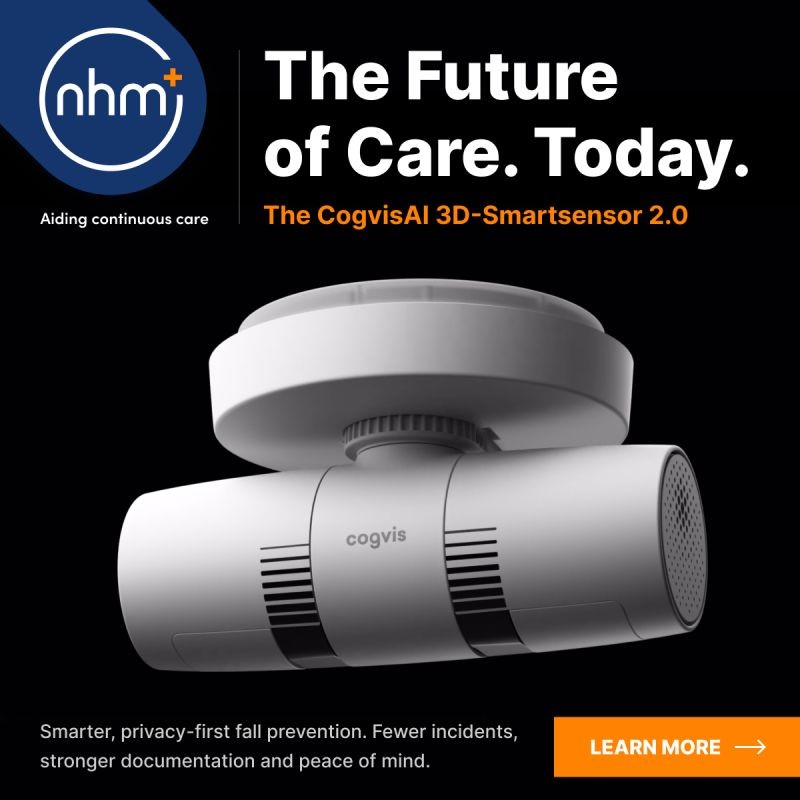
Cogvis supports both reactive safety and proactive prevention.
The result is not simply more monitoring. It is smarter intervention and a shift from responding to falls toward preventing them.
If you are reviewing your current fall prevention strategy and want to explore more proactive, dynamic approaches, you can register your interest here:

Terry Clarke | NHM
Sales Director


